It started with a very specific clip—not a trend, not a compilation, just one video that people kept replaying for a detail they couldn’t fully explain.
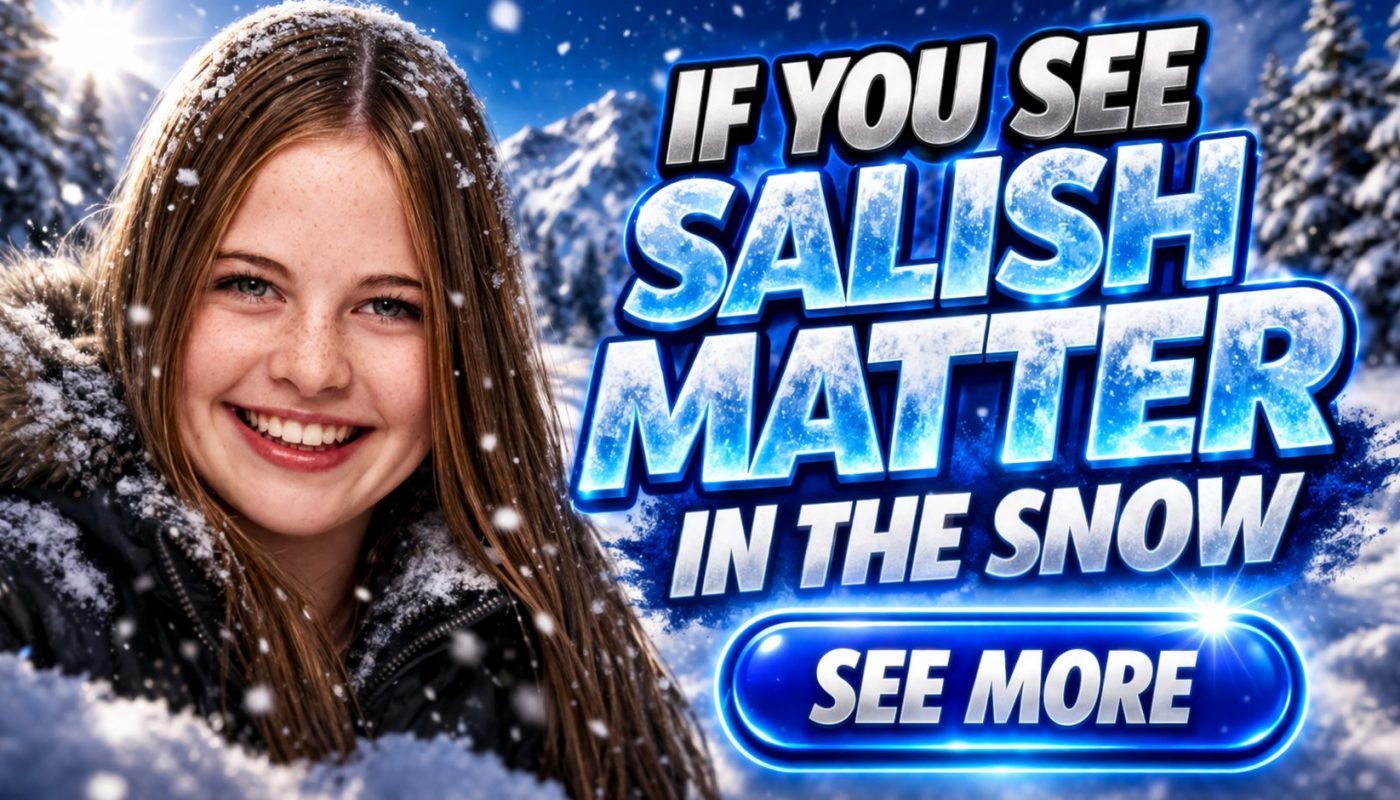
In that clip, Salish Matter is walking alone through fresh snow. No background music. No cuts at the beginning. Just the sound of her steps and the wind.
At first, nothing feels strange.
Then she stops.
The exact moment that changed everything
About six seconds into the clip, she suddenly freezes mid-step. Not a natural stop—there’s no visible reason for it. Her body remains slightly tilted forward, like she was about to take another step but didn’t.
Then she slowly turns her head toward the camera.
Not a full turn. Just enough so that her eyes align directly with the lens.
What stands out isn’t the movement—it’s the timing.
The pause lasts just a bit longer than it should.
The detail most people missed on the first watch
When the clip is slowed down frame by frame, there’s a very subtle inconsistency.
Right as she finishes turning her head, there’s a micro-shift in her position. It’s not a jump cut in the traditional sense—there’s no visible transition—but her posture changes slightly between two frames.
Her right shoulder drops a few pixels lower.
At the same time, the imprint of her last step in the snow doesn’t match the position of her foot anymore.
It’s a tiny detail, but once you notice it, you can’t unsee it.
Why the snow setting makes this clip work
This exact sequence wouldn’t have the same effect anywhere else.
The snow removes almost everything:
- No background movement
- No color variation
- No visual noise
That forces your attention onto small details—like timing, posture, and sound.
Even the footsteps play a role.
At the beginning, each step produces a crisp, synchronized sound. But right after she stops, the audio of the last step continues for a fraction longer than expected.
It’s barely noticeable unless you’re listening for it.
The moment that made people rewatch it
After the head turn, there’s a second pause.
This one is shorter, but more precise.
She looks directly at the camera… and doesn’t blink.
Not once.
Then, without any visible transition, she resumes walking—but the pace is slightly different. Just fast enough to feel off compared to the steps at the beginning.
That contrast is what makes viewers go back and replay it.
How “run immediately” became attached to the clip
The phrase didn’t come from the video itself.
The first reuploads added a simple caption:
“If you see this, don’t stay.”
Later versions changed it to:
“If you see Salish Matter in the snow… run.”
The wording wasn’t random. It was placed right before the moment she stops, so viewers would reach that frame already expecting something to happen.
That changes how the scene is perceived.
Versions that amplified the original detail
As the clip spread, some edits started enhancing specific parts:
- A slight zoom during the head turn
- Lowered ambient sound to highlight the footsteps
- A brief visual glitch inserted exactly at the micro-shift
But what made the original clip work is that none of those edits were necessary.
The detail was already there.
Why this specific clip keeps getting replayed
It’s not about shock or obvious effects.
It’s about precision.
- The stop happens at an unusual point in the motion
- The head turn is slightly slower than expected
- The micro-shift is almost invisible
- The sound extends just a fraction too long
Each element on its own is subtle.
Together, they create something that feels inconsistent without being clearly wrong.
That’s what makes people watch it again.
How to recreate this exact style of video
If you want to replicate this format, the key is control, not randomness.
1. Clean environment
Use a setting with minimal distractions—snow works best because it removes visual noise.
2. Continuous motion at the start
No cuts. Let the viewer trust the scene.
3. A pause that feels slightly too long
Timing is everything here. Even half a second matters.
4. A nearly invisible inconsistency
A micro-cut, a small positional shift, or a sound mismatch.
5. Direct eye contact
This connects the viewer to the moment and makes the pause more noticeable.
Why people keep analyzing it
Because nothing in the clip is obvious.
Viewers aren’t reacting to something clear—they’re trying to figure out what feels off.
That uncertainty is what drives repeat views.
Frequently asked questions
Is the original clip edited?
The base clip appears continuous, but some versions online include added edits to highlight certain details.
What is the main inconsistency?
A combination of timing, a slight positional shift, and a subtle audio mismatch.
Why does the snow matter so much?
Because it removes distractions and makes small irregularities easier to detect.
Can this effect be recreated intentionally?
Yes, but it requires precise control over timing and very small visual adjustments.
Why do people add “run immediately”?
To frame the moment before it happens and increase viewer attention.
This article you may also be interested in: